Free Lesson Plan: Polarity
Why can some molecules cross the plasma membrane easily while others require specialized channels or the use of energy? What gives water its important properties of cohesion and adhesion?
To answer these questions, students will need to understand molecular polarity. This essential concept can be tough for students to grasp, but Visible Body Suite has everything you need to teach engaging, interactive lessons about covalent bonding, polarity, and the plasma membrane.
Follow along with this free lesson plan to see how you can use Visible Body’s resources to help your students become polarity pros.
1. Pre-class assignment: A&P biochemistry models
For either a review of or an introduction to the basics of atomic structure, ionic vs covalent bonds, molecular polarity, and diffusion, students can work through our guided biochemistry modules before class.
They will start by identifying protons, neutrons, and electrons using our 3D atomic structure models. Then, they’ll move on to learning about electron shells and how gaining or losing an electron creates an ion. Next, they will compare ionic and covalent bonding using the interactive simulations of NaCl and H2O molecules.
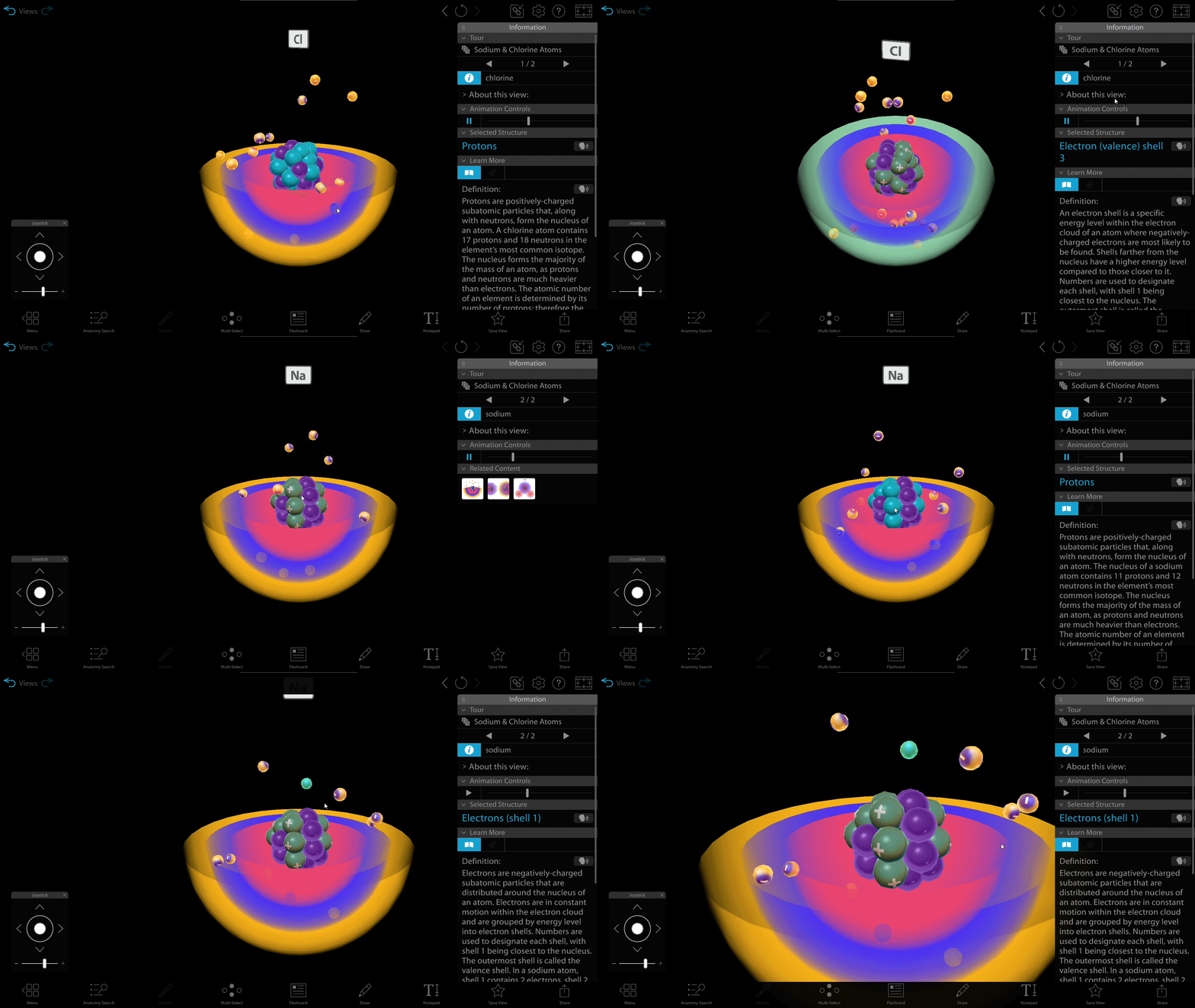
Model of atomic structure in VB Suite showing nucleus and electron shells.
While studying covalent bonding, they will also be introduced to the idea that the sharing of electrons isn’t always equal. This will take them through our illustrations on molecular polarity. Lastly, they’ll be able to explore a model of the plasma membrane in 3D and observe diffusion.
The biochemistry modules make up B.1-B.10 of Chapter 0 in the Anatomy & Physiology course section of Visible Body Suite, so students can access them independently on the web or on their mobile devices for easy studying.
For a more structured assignment experience, including tracking completion and time on task, you can also assign these modules inside Courseware.
2. Lecture activity: interactive water molecule
During lecture, you can focus in on the interactive water molecule to explore a polar covalent bond in detail with your students.
Once you’ve reviewed how covalent bonds can be either polar or nonpolar, you can use the water molecule to illustrate how the two “poles” form as a result of unequal sharing of the electrons between the oxygen atom and the two hydrogen atoms.
Show the water molecule/covalent bonding simulation to the class using your projection system or on an interactive touch display. Students can follow along on their computers or mobile devices – whatever your classroom/lab setup allows for. They can even use class devices in groups if that’s what you have, or if you want them to just focus on the screen at the front of the room, that’s fine too.
Play the simulation and ask students to focus on the electrons. You can use the scrubber in the Animation Controls to slow down or speed up the simulation speed as needed. Ask students what they notice about the movement of the electrons around the hydrogen atoms after the covalent bond forms.
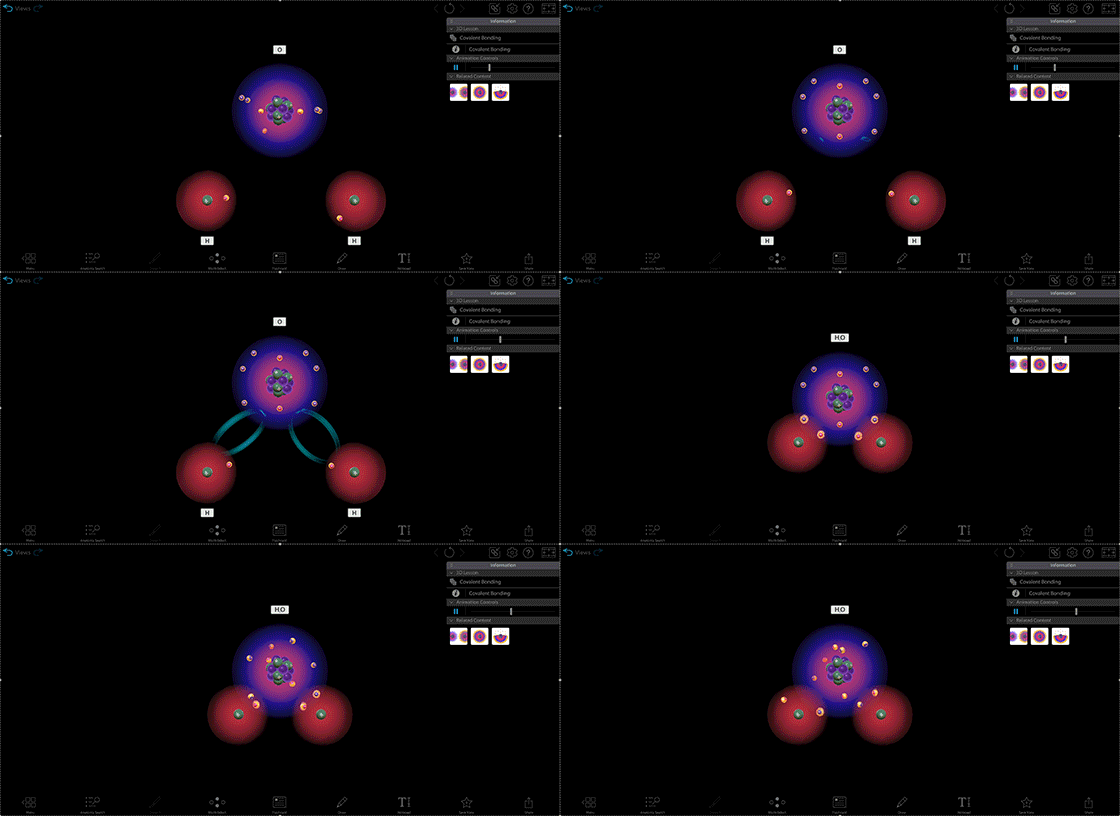
Simulation of the covalent bonds that form a water molecule in VB Suite.
Then, play the ionic bond simulation and have students describe the difference between what happens with the electrons in this type of bond.
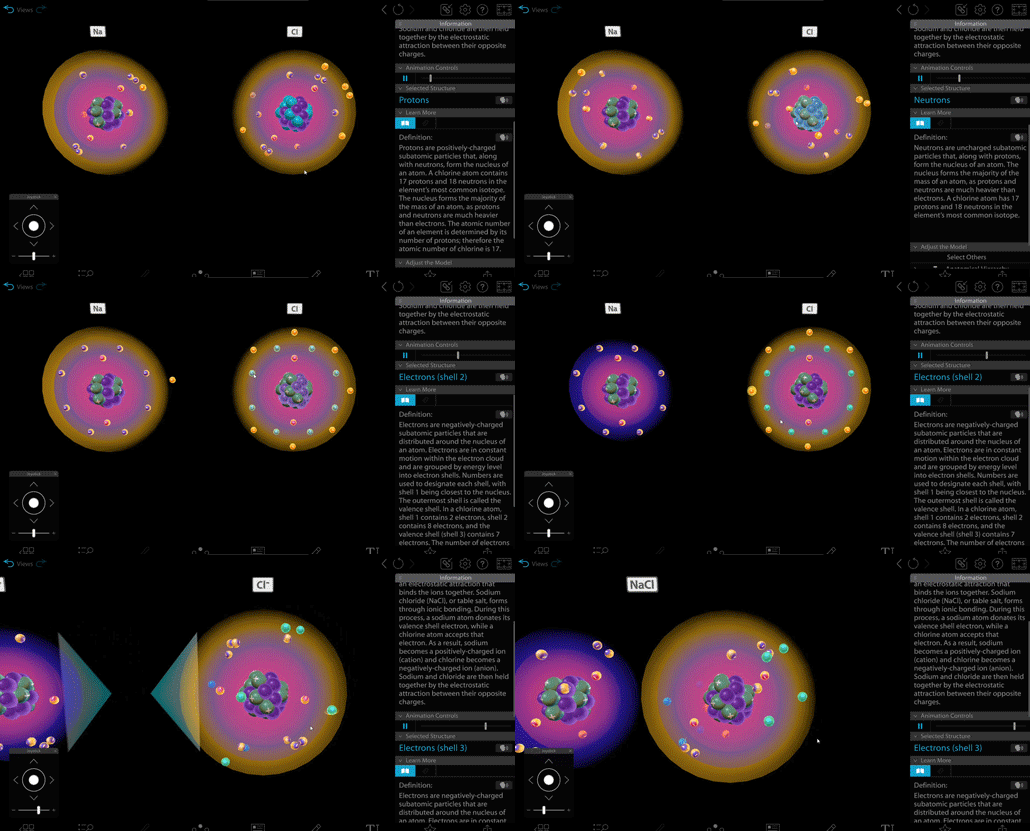
Simulation of the ionic bonds that form sodium chloride in VB Suite.
Going back to the covalent bond simulation, you can dive a little deeper by discussing why the sharing is unequal in a water molecule: oxygen is more electronegative than hydrogen. To explore the concept of electronegativity, students can count the number of electrons in hydrogen’s valence shell and in oxygen’s outermost valence shell. They can also count the number of protons in oxygen’s nucleus. The oxygen atom’s nucleus contains 8 protons (in contrast with hydrogen’s single proton), which attracts the electrons of the hydrogen atoms.
Talk about how adding more electrons results in a negative charge and have students apply that knowledge by asking a student to come up and use the Draw Tool to illustrate which end of the molecule should have a slightly negative charge (and which one should have a slightly positive charge).
If you want to go one step further, you can discuss what happens when you put salt (NaCl, an ionic compound) into water and ask students why water’s polarity would be relevant.
3. Group activity and discussion: interactive plasma membrane
Now that your students understand what makes a molecule like water polar, they will examine how polarity affects a molecule’s ability to cross the plasma membrane of a cell.
Have students work individually or in groups on a computer or mobile device using Visible Body Suite. They should open the Diffusion simulation in the Biochemistry part of the Biology section.
First, ask students to highlight the elements of the phospholipid bilayer – the heads and tails – and write down their properties in a chart like this based on what they learn from the descriptions in the info box. You can also have students write down the definitions of hydrophobic, hydrophilic, polar, and nonpolar.
|
Term |
Definition |
|
Hydrophobic |
|
|
Hydrophilic |
|
|
Polar |
|
|
Nonpolar |
|
|
Structure |
Composition |
Hydrophobic or hydrophilic? |
Polar or nonpolar? |
|
Heads |
|
|
|
|
Tails |
|
|
|
Then have students focus on the molecules crossing (or not crossing) the plasma membrane in the simulation. They will need to watch the simulation and highlight different molecules and structures to read their descriptions in the info box. They can manipulate the number of oxygen, sodium, and glucose molecules using the controls.
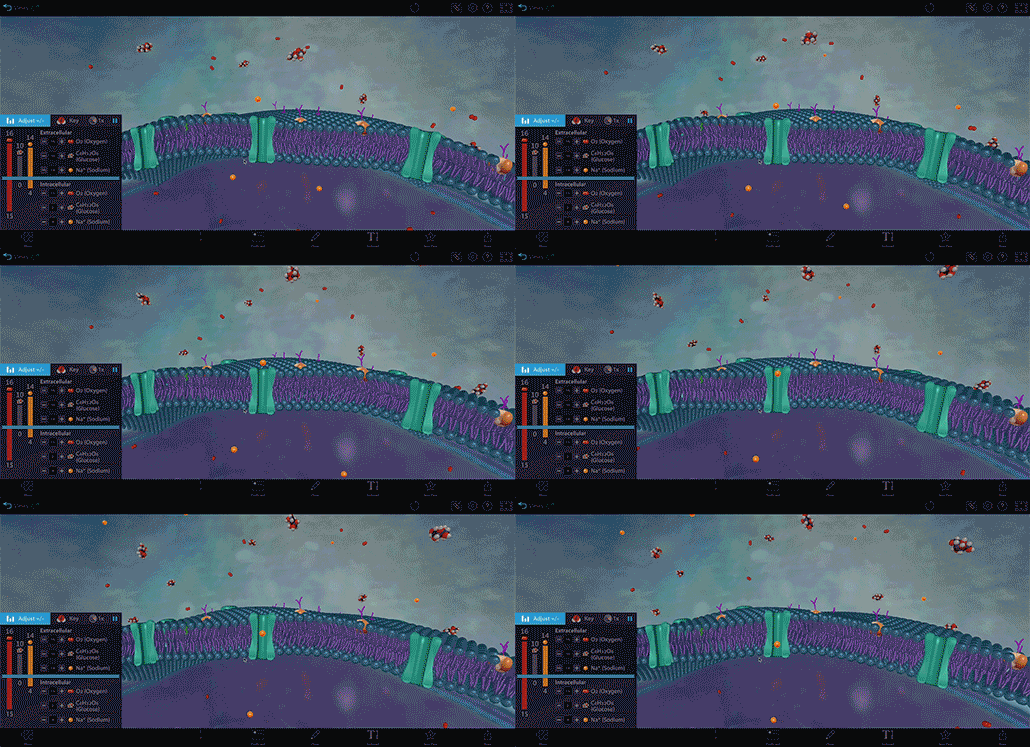
The interactive plasma membrane and diffusion simulation in VB Suite.
To think about how polar and nonpolar molecules interact, have students consider how water (polar) and fat (nonpolar) interact, and connect that to the fact that the tails in the phospholipid bilayer are fatty.
Then, they can fill out a worksheet or chart like this one based on their observations of the different molecules they’ve learned about:
|
Molecule |
Size |
|
|
How does it cross the membrane? |
|
Oxygen - O2 |
|
|
|
|
|
Sodium - Na+ |
|
|
|
|
|
Glucose - C6H12O6 |
|
|
|
|
|
Water - H2O |
Small |
|
|
Slowly on its own, or quickly through special channels called aquaporins |
You can fill in the details for water (other than polarity) to complete the chart. If time allows, you can discuss why water is an “exception” in certain ways and how water has its own “special” category of diffusion: osmosis. If students want to learn more about osmosis in the human body, they can watch the fluid balance animation and study the osmosis/tonicity illustration in VB Suite.
Lastly, either in a discussion or on the same worksheet as their chart (or both), have students answer the following questions:
-
What properties of molecules allow them cross the plasma membrane easily? Which ones make crossing more difficult?
-
Based on the answer to Question 1 and what you learned about the heads and tails of the phospholipid bilayer, why might a molecule’s polarity affect whether it can diffuse across the plasma membrane?
-
What’s special about water with respect to crossing the plasma membrane?
4. Drawing and demonstration: exploring water's surface tension
Next, it’s time to get hands-on and see polarity in action in the real world and talk even more about what makes water special and particularly important in the context of biology.
Briefly explain (or have a student explain) the concept of the intermolecular forces between polar molecules – the positive end of one molecule and the negative end of another will be attracted to each other. Highlight the hydrogen bonds of water molecules as an example of this type of interaction between the positive end of one water molecule and the negative end of another.
Then, invite students to explore this concept in the context of water molecules with a brief drawing activity. Either on paper or using the Draw Tool on the covalent bond/water molecule simulation in Visible Body Suite, have them make a sketch of what the interaction between water molecules would look like based on their “poles.” They can check their work by looking back at the illustrations from the Biochemistry chapter in Visible Body Suite.
Hydrogen bonds are important to water’s property of cohesion – that is, water molecules’ attraction to each other. It’s why water forms droplets, and it’s responsible for the high surface tension that lets certain types of insects “walk” on water.
Students can see the effect of surface tension using a “floating paperclip” demonstration. Students can work in groups for this one. Each group will need:
- 1 clear plastic cup filled with water
- 2 paperclips
- Dish soap
- A toothpick
- A paper towel (optional)
Before beginning the activity, ask students to write down a prediction as to whether a paperclip will sink or float when placed in the cup of water. They can use a table like this one to keep track of their predictions versus the actual results, as well as the reasoning behind their predictions and the explanation for the results.
Will the paperclip float?
|
|
Prediction |
Reasoning |
Result |
Explanation |
|
Plain water |
|
|
|
|
|
Water with soap |
|
|
|
|
Then, have them place one of their paperclips into the water. The additional paperclip can be shaped to help lower the first paperclip, or the end of one paperclip can be bent upward to serve as a “handle”.
Have students write down the result and consider whether it matched the prediction. In their groups, they can come up with an explanation for the result based on what they’ve learned so far in class.
Then have them predict what will happen to the paperclip when soap is added to the water (will it keep floating?).
They should then add soap to the water by dipping the toothpick into the soap, then touching the drop of soap to the surface of the water, watching what happens, and writing down the result and their explanation.
Additional Resources
That’s all for this lesson plan, but if you’d like more ideas for teaching about diffusion and osmosis, check out this blog post: Diffusion and Osmosis with Visible Body Suite. We’ve also got a blog post and a Learn Site article that dive a bit deeper into the various types of passive vs. active transport.
For more free lesson plans on other biology and A&P topics, check out our full collection of lesson plan blog posts here.
External Sources
-
More about the "floating paperclip" and other surface tension demonstration activities:
- Khan Academy video: Electronegativity and Bond Polarity