
How Do GLP-1 Medications Work?
From catchy advertising jingles and celebrity gossip to the cutting edge of scientific research, you’ve probably been hearing a lot about GLP-1 receptor agonists lately. Often called GLP-1s, or GLP-1 medications, these drugs are typically used to help patients with type 2 diabetes regulate their blood glucose.
They are also prescribed for weight loss. This has generated a lot of buzz on social media... and a whole lot of advertising for subscription programs and compounded forms of these drugs from popular weight loss companies.
So you might be wondering: how do these medications work? Let’s dive in and use some 3D visuals from Visible Body to help illustrate how GLP-1s help with diabetes management and weight loss.
What is GLP-1?
Before we get to the biochemistry, let’s get our terminology straight.
GLP-1 stands for glucagon-like-peptide-1. It’s an incretin hormone produced by L-cells in your gut. Incretins are hormones that decrease blood glucose levels. GLP-1 receptors can be found throughout the body— most importantly for our purposes, in the GI tract, pancreas, and brain.
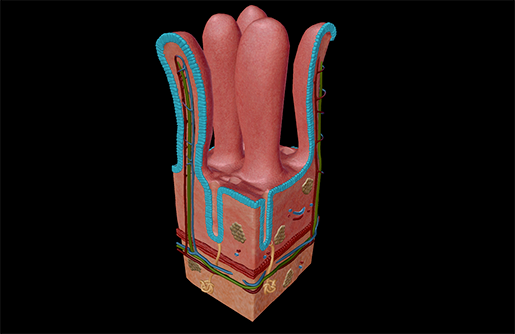
Epithelial cells in the pancreas in Visible Body Suite.
GLP-1 receptor agonists are the substances in GLP-1 medications. They are very similar to the GLP-1 hormone in your body and target the same receptors, mimicking its effects.
GLP-1 medications go by several different names, but semaglutide, liraglutide, and dulaglutide are common examples. Tirzepatide is another one you might have seen. That drug is actually both a GLP-1 and a GIP receptor agonist. GIP is another incretin hormone.
What does GLP-1 do in the body?
So what exactly does the GLP-1 hormone do?
GLP-1 is secreted when you eat food. It signals beta cells in your pancreas to release insulin and inhibits the secretion of glucagon, lowering blood sugar levels.
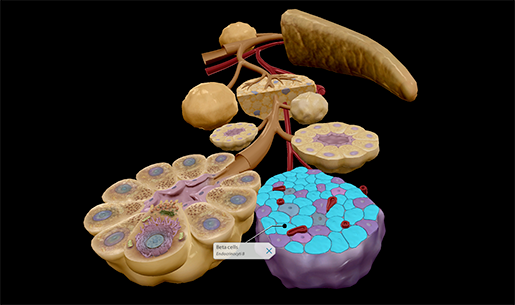
Beta cells in the pancreas in Visible Body Suite.
It also slows gastrointestinal motility, meaning that gastric (stomach) emptying is slowed down, and food will move through the GI tract more slowly. This increases feelings of fullness, or satiety.
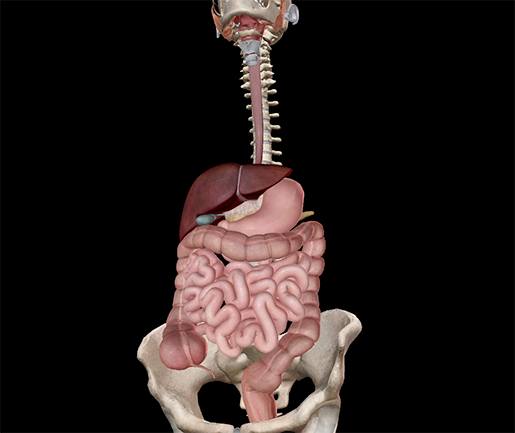
Structures of the GI tract in Visible Body Suite.
Lastly, GLP-1 signals to your brain (specifically the hypothalamus) that you’re full.
What do GLP-1 receptors do?
As we mentioned earlier, GLP-1 receptor agonists mimic what GLP-1 does in your body, binding to the same receptors. However, GLP-1 receptor agonists are designed to stick around longer in your bloodstream than naturally-produced GLP-1.
All of this is what allows GLP-1 receptor agonists to help treat type 2 diabetes. In type 2 diabetes, the body’s cells become insulin resistant, and the pancreas struggles to produce enough insulin.
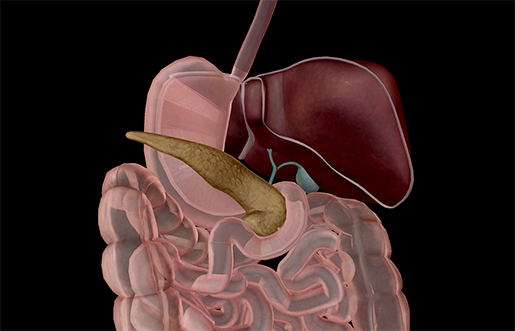
The pancreas in Visible Body Suite.
As a result, blood sugar levels rise. Just like GLP-1, GLP-1 receptor agonists signal the pancreas to produce more insulin and inhibit the production of glucagon, helping to lower blood sugar. The fact that they slow down digestion also helps keep blood sugar levels from spiking throughout the day.
GLP-1 receptor agonists are also particularly effective for weight loss because they slow down digestion and increase feelings of satiety, decreasing appetite and food intake. Anecdotally, lots of people who take GLP-1 medication agonists report that the "food noise" in their head really quiets down, minimizing cravings.
Using a GLP-1 for weight loss isn’t just about the number on the scale, either. Many people with obesity are at risk for other health conditions, like heart disease, stroke, liver disease, and kidney disease. Losing weight helps lower these risks. It can also help manage obstructive sleep apnea.
Side effects
Since GLP-1 receptor agonists affect the function of the digestive system, it’s probably not surprising that the most common side effects include nausea, vomiting, diarrhea, constipation, and abdominal discomfort.
But there are also some more intense side effects that you may have heard about. Muscle loss and gallbladder problems are known to occur in folks taking GLP-1 receptor agonists, though these issues tend to result from rapid weight loss more generally. Pancreatitis has been associated with GLP-1 medication use as well, though it is not among the more common side effects.
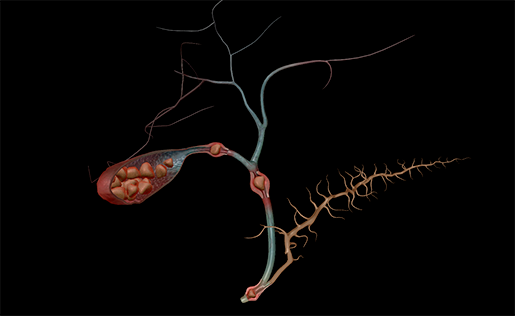
Gallstones and the gall bladder in Visible Body Suite.
Before starting a GLP-1 medication, it’s important to discuss these risks with your doctor. It should also be noted that people who are pregnant or breastfeeding shouldn’t take GLP-1 medications.
Miracle drugs? Nope, just science.
People in the media might call GLP-1s “miracle drugs,” but there’s nothing magical about them—just lots of dedicated scientists and rigorous research.
And the work isn’t done yet! There is still a lot we can learn about the long-term benefits and risks of these medications, as well as other conditions they might be able to treat. For example, researchers are looking into how GLP-1s might be used to delay the onset or slow the progress of Alzheimer’s Disease. Given the tendency of these drugs to quiet “food noise,” and reduce cravings, the treatment of addiction is another area where scientists see a lot of potential for GLP-1s.
Ultimately, GLP-1 receptor agonists are a powerful class of drugs that have the potential to help many people improve their health and manage chronic conditions.
Additional Sources:
Westchester Medical Center Health: Beyond the Ozempic Buzz: How GLP-1s Actually Work
National Academy of Medicine: GLP-1 Key Facts
Baylor Scott and White Health: GLP-1 medications explained: Benefits, risks and how they work
National Kidney Foundation: GLP-1 Receptor Agonists (GLP-1 RAs)